Lifestyle
Sleep and fat loss: what science says
Discover how sleep influences fat loss, muscle gain and hormones. Practical tips based on scientific research.
Do you train regularly and watch what you eat, but find your progress has stalled? The culprit could be hiding in your nights. Scientific research shows that sleep plays a decisive role in body composition, directly influencing fat loss, muscle gain and hormonal balance. Understanding these mechanisms will help you optimise your fitness results.
Sleep and metabolic hormones: a crucial trio
When you do not get enough sleep, your body experiences major hormonal disruptions that sabotage your efforts to transform your physique. Three key hormones are particularly affected by sleep restriction.
Leptin, the satiety hormone, drops drastically when you are short on sleep. This drop sends a starvation signal to your brain, increasing your appetite even if your energy reserves are sufficient. At the same time, ghrelin, the hormone that stimulates hunger, rises significantly. This imbalance creates a hormonal environment that encourages cravings, sugar cravings and excessive calorie intake.
Testosterone, an anabolic hormone essential for muscle building and fat loss in both men and women, also drops during sleep deprivation. Studies in healthy young men show that one week of restricted sleep can significantly reduce testosterone levels, directly affecting muscle recovery and metabolism.
Sleep and fat loss: the scientific evidence
One notable study revealed that sleep quality can determine the type of weight you lose. Participants in a calorie deficit were divided into two groups: one getting enough sleep and the other undergoing sleep restriction. The results were striking: although both groups lost weight, the sleep-restricted group lost proportionally much less body fat, with fat loss reduced by more than half compared with the well-rested group.
Even more concerning, the sleep-deprived group lost more lean mass (muscle) than fat. In other words, insufficient sleep steers your body towards losing muscle rather than fat, the exact opposite of what most people pursuing fitness goals want. This muscle catabolism is explained by the combination of high cortisol, low testosterone and inadequate recovery.
The scientific consensus also shows that insufficient sleep increases insulin resistance, promoting fat storage and making it harder to mobilise fat. Your insulin sensitivity can deteriorate after just a few nights of insufficient sleep, creating a metabolic environment that is unfavourable for fat loss.
Impact on performance and muscle recovery
Beyond body composition, sleep directly influences your athletic performance and your ability to build muscle. During deep sleep, your body releases growth hormone, which is essential for repairing and growing muscle tissue damaged during training.
Research shows that sleep-deprived athletes experience several disadvantages:
- Decreased maximal strength and muscular power
- Reduced endurance and increased perceived fatigue
- Slower reaction times and impaired coordination
- Increased risk of injury
- Slower muscle recovery between sessions
Your motivation to train also decreases, creating a vicious cycle in which insufficient sleep reduces your ability to maintain the intensity and consistency needed to achieve your goals.
Practical recommendations to optimise your sleep
Science clearly establishes that quality sleep is non-negotiable for optimising your body composition. Here are research-backed strategies to improve the duration and quality of your sleep.
Optimal sleep duration
Aim for between 7 and 9 hours of sleep per night. Studies show that regularly getting less than 7 hours triggers the hormonal and metabolic disruptions described above. Consistency matters as much as duration: go to bed and wake up at set times, even on weekends, to stabilise your body clock.
Managing light exposure
Exposure to blue light from screens in the evening inhibits the production of melatonin, the sleep hormone. Limit screen use for at least one hour before bed, or use blue light filters. Conversely, expose yourself to natural light in the morning to reinforce your circadian rhythm and improve daytime alertness.
Sleep environment
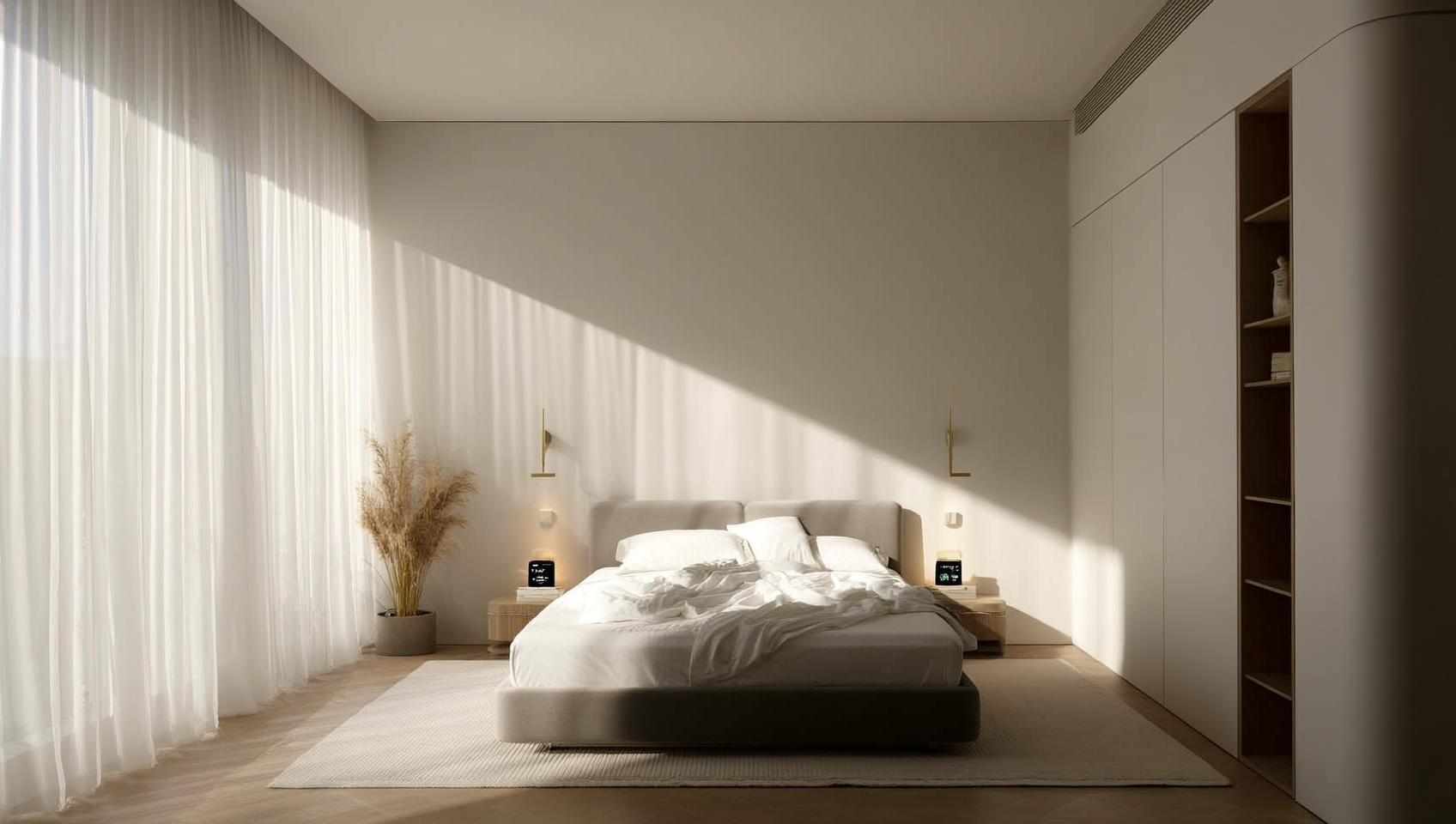
Your bedroom should be cool (around 18 degrees), dark and quiet. Body temperature naturally drops during sleep; an overly warm environment disrupts this process. Invest in blackout curtains and eliminate sources of noise. Reserve your bedroom for sleep and intimacy, not work or screens.
Meal and workout timing
Avoid large meals in the 2 to 3 hours before bed. Intense workouts too close to bedtime can also make it harder for some people to fall asleep because they activate the sympathetic nervous system. If you train in the evening, allow at least 2 hours of recovery before sleep, and favour calming activities such as stretching.
Stress management and an evening routine
High cortisol makes it harder to fall asleep. Establish a relaxing routine: reading, meditation, deep breathing or a warm bath. These practices signal to your body that it is time to slow down. Limit caffeine after noon and alcohol in the evening, as they fragment sleep and reduce its quality despite an initial feeling of drowsiness.
Achieve your goals with Beexfit
Optimising your sleep is an integral part of a comprehensive approach to fitness. At Beexfit, our fitness and nutrition coaching in Switzerland incorporates every pillar of your transformation: personalised training, tailored nutrition and lifestyle management, including sleep. Our coaching app supports you every day with bespoke programmes that respect your biological rhythm and maximise your recovery. Because your results are built not just in the gym but also in bed, discover how Beexfit can help you achieve lasting changes in your body composition.